
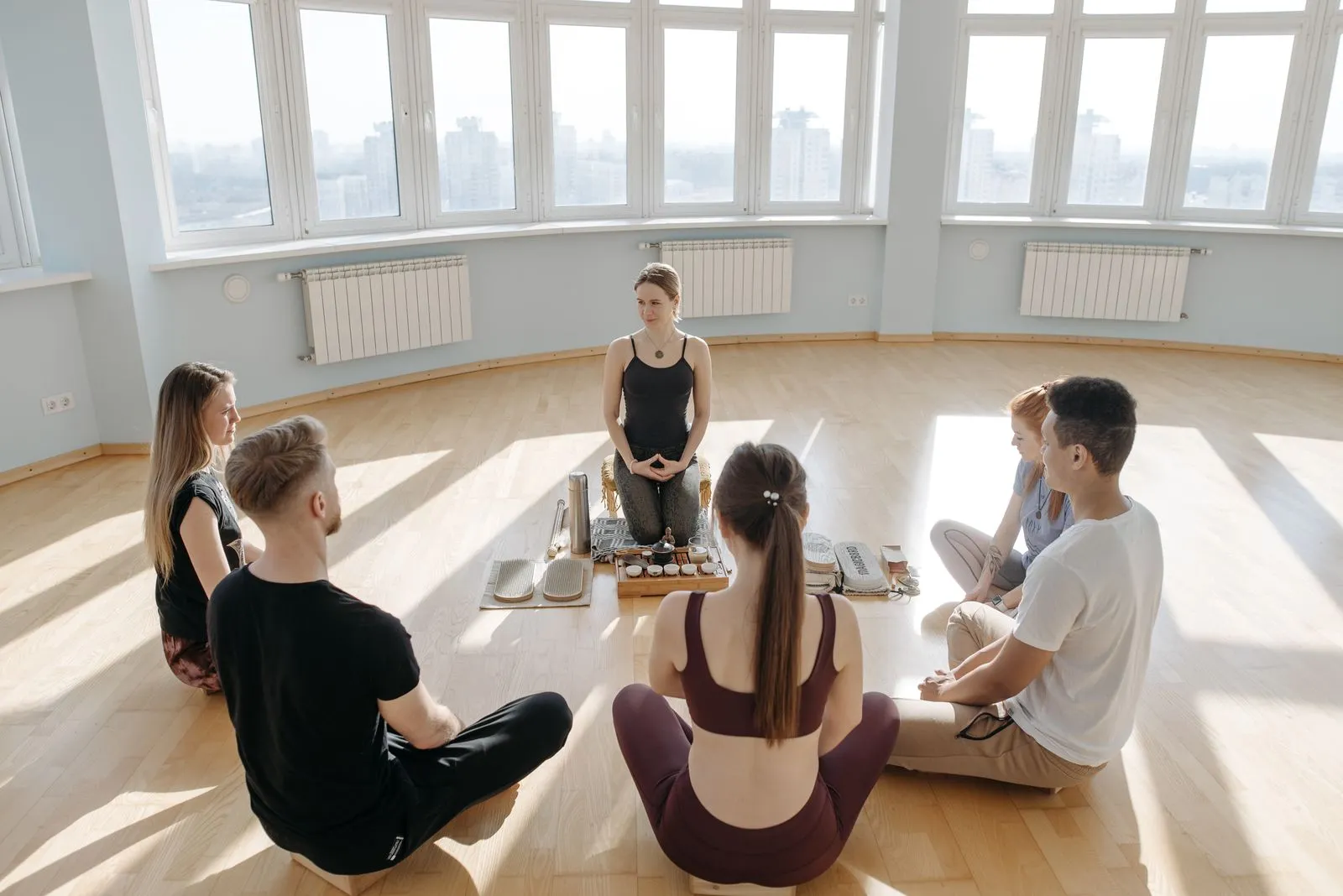
Good listening in improv means more than waiting for a turn to speak. Students need to notice a partner’s words, tone, movement, and small changes, then respond in a way that keeps the exchange moving. These simple group games make those skills visible and fun to practice. They work with beginners, classrooms, and theater groups, and can be adjusted for different ages or comfort levels. Start with short rounds, clear instructions, and room to reflect.
Pass the Detail
Have the group stand or sit in a circle. One person says a simple sentence, such as, “I found a blue button.” The next person repeats the sentence and adds one detail: “I found a blue button under a chair.” Continue around the circle, repeating the growing story as accurately as possible before adding to it.
The goal is not to create the strangest story. It is to attend to what has already been said. If someone forgets a detail, pause and invite the group to help rather than treating the mistake as a failure. After a round, ask which details were easiest to remember and what helped students stay focused.
Copy the Movement
Pair students and ask them to face each other. One partner makes slow, simple movements while the other mirrors them as closely as possible. After a minute, switch leaders without announcing the change. Keep the pace gentle so both partners can notice shifts in posture, direction, and rhythm.
Once students feel comfortable, let them move without deciding in advance who leads. The pair works together to make the movement feel shared. Remind them to watch the whole person, not just the hands. This exercise builds visual attention and encourages students to adjust instead of forcing their own idea.
Build the Conversation
In pairs, give students a simple opening line, such as, “I brought something for us.” Each response must connect to a specific word or idea from the line before it. Students can add information, ask a relevant question, or show how the new detail affects them. Keep the scene brief and let the conversation develop naturally.
After each scene, ask partners to name one detail they heard and used. If a response ignored the previous line, replay that moment and try a more connected answer. This helps students distinguish between merely saying something and responding to a partner. Encourage specific choices; a small, clear response often gives a scene more direction than a sudden change of subject.
Notice, Then Respond
Ask students to form a circle. One person shares a short statement about an imaginary situation, such as, “The room is unusually quiet.” The next person first repeats one detail they noticed, then responds with a related thought or action. Continue around the circle, carrying forward details from earlier contributions.
To keep the exercise thoughtful, encourage students to leave a brief pause before answering. They can notice a feeling, an image, or a change in the speaker’s voice. Afterward, discuss how the pause affected their responses. The aim is not to make every answer perfect; it is to give each person’s contribution enough attention to shape what happens next.
Listening improves when students practice noticing, remembering, and responding—not just taking turns. Choose one game, keep the first round short, and finish by asking what details helped the group connect. Alamo Improv Studio offers a welcoming place to explore these skills together; consider reaching out to learn about its classes.