
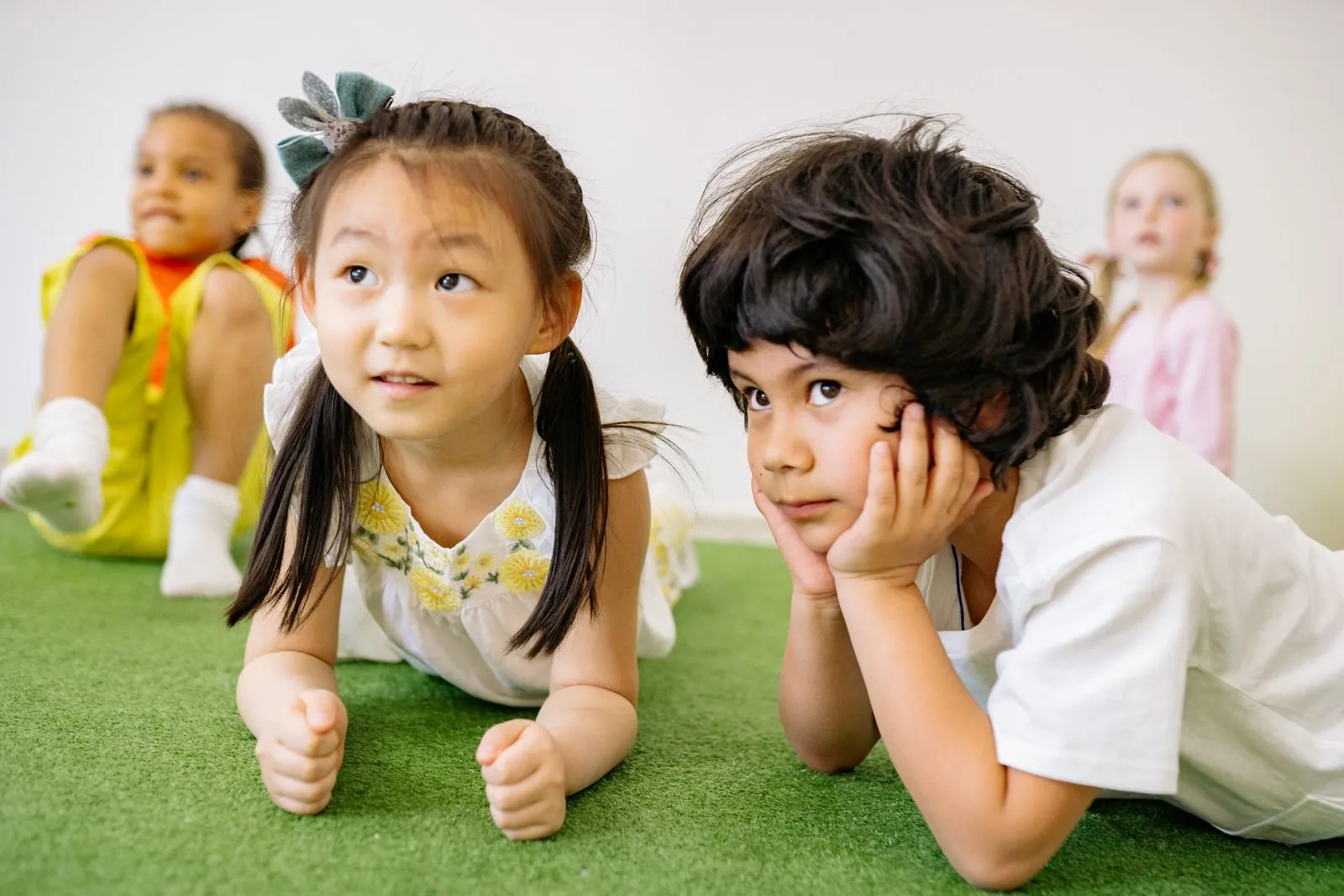
Confidence grows through practice, not pressure. In a kids’ improv class, children get chances to listen closely, respond to a partner, and put their own ideas into a scene. They learn that a contribution does not need to be perfect to move a story forward. With clear guidance and room to try again, these small experiences can help kids feel more comfortable speaking up, making choices, and working with others.
Listening Builds Connection
Improv asks children to pay attention to what a scene partner says and does. Instead of planning a reply while someone else is speaking, they practice noticing words, expressions, and actions. That focus helps a child respond to the moment and shows the partner that their ideas matter.
Feeling heard can make it easier for kids to participate. In class, an instructor can invite each student to contribute at a comfortable pace, without requiring everyone to be the loudest person in the room. As children listen and receive attention in return, they can begin to trust the group and their own voice.
Choices Turn Ideas Into Action
A scene often begins with an open question: Where are we? Who are we? What happens next? Children make choices about characters, settings, and actions, then see how those decisions shape the scene. This gives them a practical way to move from having an idea to expressing it.
Not every choice will work as expected, and that is part of the exercise. An instructor can help students treat an unexpected turn as something to build on rather than a mistake to hide. Repeated practice can make trying feel less daunting, both onstage and in everyday situations where a child has to choose what to say or do.
Sharing Ideas Takes Practice
Improv gives children a reason to contribute: a scene needs their suggestions, reactions, and imagination. They might invent a place, add a surprising detail, or help a partner’s idea continue. Short activities let students practice sharing without needing to prepare a speech or get every word right.
A supportive drama class welcomes different ways of participating. Some kids may jump into a scene quickly; others may need time to watch before they speak. Teachers can offer clear prompts, small-group activities, and encouragement for effort, helping each student take a manageable next step.
Teamwork Makes Room to Grow
Improv is a group activity, so students learn to support one another rather than compete for the spotlight. They can accept a partner’s offer, add to it, and help the scene keep moving. When a moment feels awkward, the group can adjust together and continue.
That shared responsibility can ease the pressure to perform perfectly. Kids see that a scene depends on everyone’s contributions, including quiet observations and simple choices. Over time, a child may become more willing to take a turn, try an unfamiliar role, or recover when a scene does not go as planned.
Improv cannot make every child confident overnight, but it offers regular, low-pressure ways to listen, contribute, and take creative risks with a group. Look for a class that welcomes different personalities, gives clear guidance, and treats mistakes as part of learning. A trial class can help your child see whether the environment feels like a good fit.